araby world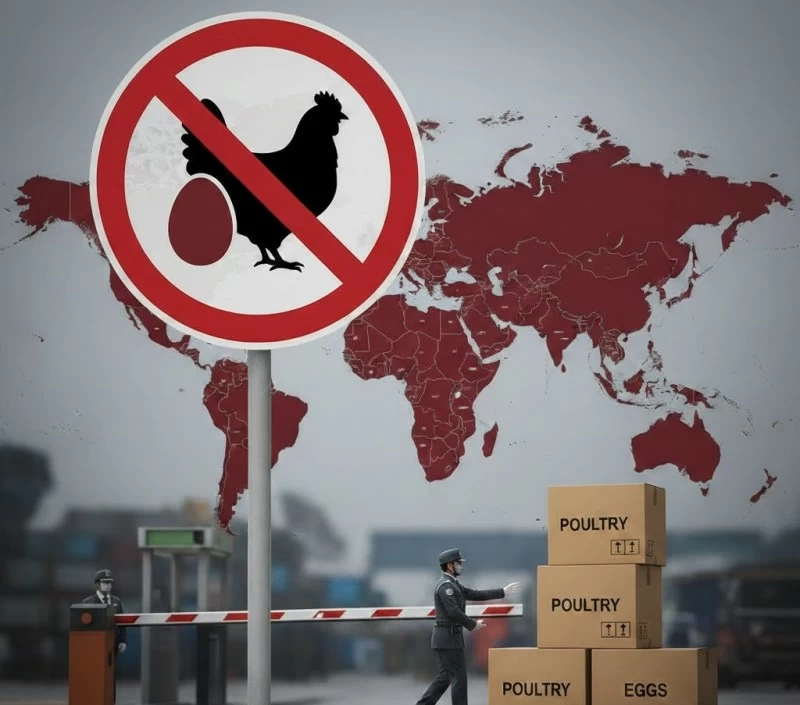
حظرت الهيئة العامة للغذاء والدواء استيراد الدواجن وبيض المائدة من 40 دولة إلى المملكة العربية السعودية، وفرضت حظراً جزئياً على ولايات 16 دولة أخرى، ضمن إجراءاتها الاحترازية الرامية إلى حماية الصحة العامة وتعزيز سلامة الغذاء في السوق المحلية، مؤكدة أن القائمة تخضع لمراجعة دورية وفقاً للمستجدات الصحية العالمية.
وأظهرت قائمة الدول المحظورة وفقا لآخر تحديث (اطلعت «عكاظ» عليه) أن بعض قرارات الحظر قائمة منذ عام 2004، فيما أُضيفت دول أخرى تباعاً خلال السنوات الماضية بناءً على تقييمات المخاطر والتقارير الدولية المتعلقة بالأمراض الحيوانية، وفي مقدمتها «تفشي مرض إنفلونزا الطيور شديد الضراوة»، ما يعكس نهجاً رقابياً مستمراً لمتابعة تطورات الوضع الوبائي عالمياً.
وبحسب التحديث، شمل الحظر الكامل 40 دولة هي: «أفغانستان، أذربيجان، ألمانيا، إندونيسيا، إيران، البوسنة والهرسك، بلغاريا، بنغلاديش، تايوان، جيبوتي، جنوب أفريقيا، الصين، العراق، غانا، فلسطين، فيتنام، كمبوديا، كازاخستان، الكاميرون، كوريا الجنوبية، كوريا الشمالية، لاوس، ليبيا، ماينمار، المملكة المتحدة، مصر، المكسيك، منغوليا، النيبال، النيجر، نيجيريا، الهند، هونج كونج، اليابان، بوركينافاسو، السودان، صربيا، سلوفينيا، ساحل العاج، الجبل الأسود».
كما شمل الحظر الجزئي من ولايات ومدن 16 دولة هي: «أستراليا، الولايات المتحدة، إيطاليا، بلجيكا، بوتان، بولندا، توغو، الدنمارك، رومانيا، زيمبابوي، فرنسا، الفلبين، كندا، ماليزيا، النمسا، جمهورية الكونغو الديمقراطية».
وأكدت الهيئة أنه سيستثنى من الحظر المؤقت لحوم الدواجن ومنتجاتها المعاملة حرارياً أو بأي طريقة أخرى كفيلة بالقضاء على فايروس إنفلونزا الطيور / نيوكاسل، على أن تكون مطابقة للاشتراطات والضوابط الصحية والمواصفات القياسية المعتمدة، مع إرفاق شهادة صحية تثبت أن المنتج معامل حراريا أو بأي طريقة أخرى كفيلة بالقضاء على فايروس إنفلونزا الطيور / نيوكاسل، وأن تكون صادرة عن الجهات الرسمية المختصة في البلد المصدر، مع عدم الإخلال بشرط أن تكون من منشأة معتمدة.
The Saudi Food and Drug Authority has banned the import of poultry and table eggs from 40 countries to the Kingdom of Saudi Arabia, and imposed a partial ban on 16 other countries, as part of its precautionary measures aimed at protecting public health and enhancing food safety in the local market, confirming that the list is subject to periodic review in accordance with global health developments.
The list of banned countries, according to the latest update (which “Okaz” has reviewed), shows that some of the ban decisions have been in place since 2004, while other countries have been added gradually over the past years based on risk assessments and international reports related to animal diseases, foremost among them being the “outbreak of highly pathogenic avian influenza,” reflecting a continuous regulatory approach to monitor the developments of the global epidemiological situation.
According to the update, the complete ban includes 40 countries: “Afghanistan, Azerbaijan, Germany, Indonesia, Iran, Bosnia and Herzegovina, Bulgaria, Bangladesh, Taiwan, Djibouti, South Africa, China, Iraq, Ghana, Palestine, Vietnam, Cambodia, Kazakhstan, Cameroon, South Korea, North Korea, Laos, Libya, Myanmar, the United Kingdom, Egypt, Mexico, Mongolia, Nepal, Niger, Nigeria, India, Hong Kong, Japan, Burkina Faso, Sudan, Serbia, Slovenia, Ivory Coast, Montenegro.”
The partial ban also includes states and cities from 16 countries: “Australia, the United States, Italy, Belgium, Bhutan, Poland, Togo, Denmark, Romania, Zimbabwe, France, the Philippines, Canada, Malaysia, Austria, the Democratic Republic of the Congo.”
The authority confirmed that poultry meat and its products that are treated thermally or by any other method capable of eliminating the avian influenza/Newcastle virus will be exempt from the temporary ban, provided that they comply with the health requirements and approved standard specifications, accompanied by a health certificate proving that the product has been thermally treated or by any other method capable of eliminating the avian influenza/Newcastle virus, and that it is issued by the official competent authorities in the exporting country, without prejudice to the condition that it comes from an accredited facility.
المصدر:
عرض الخبر من المصدر



 alsaif